AI Patent Drafting Tools and the Small Business Inventor: What They Do Well, and Where an Attorney Still Matters
An AI patent drafting tool can help a small business inventor start an application fast — but here is where skipping the attorney becomes a costly trap.
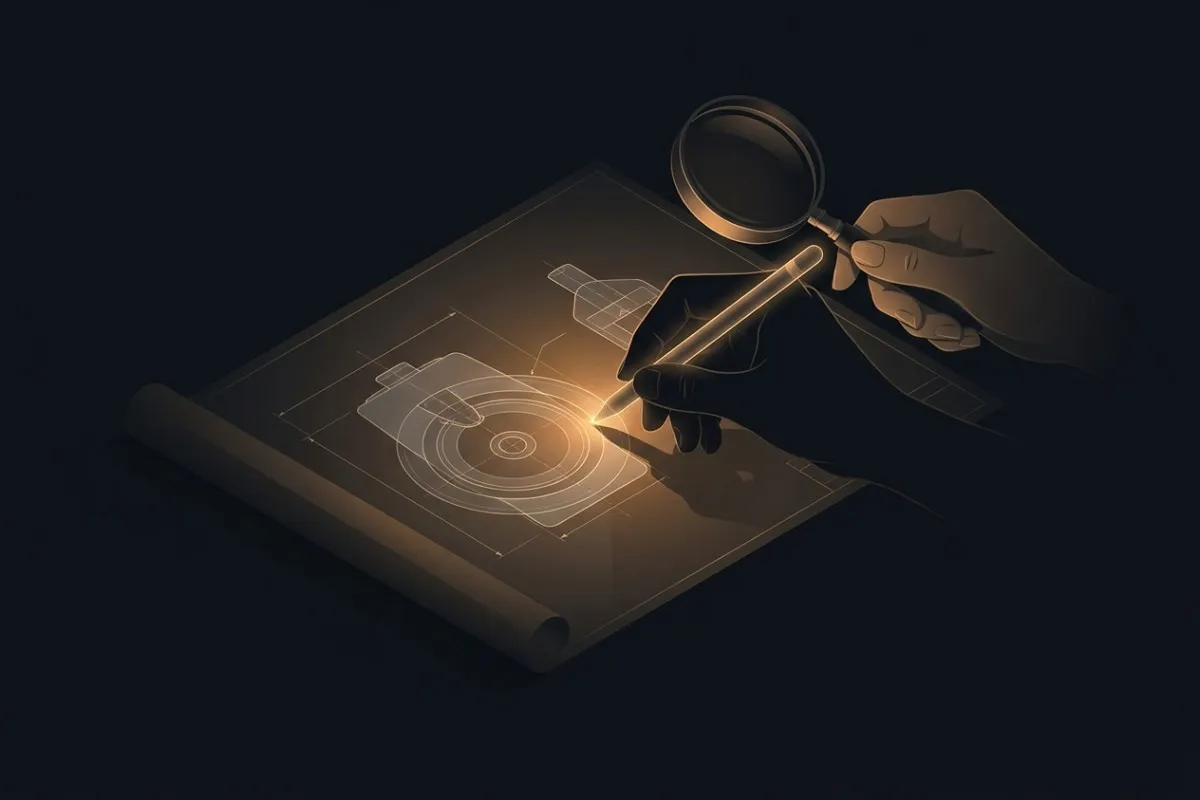
An AI patent drafting tool can now turn a small business inventor’s rough description into a formatted patent application in minutes, and for a few hundred dollars. What it cannot do is decide what to claim, defend those claims against an examiner, or write an independent claim that survives litigation. That distinction is the whole question. The tools are real, they are venture-funded, and they genuinely lower the cost of a first draft. Whether they let you skip a patent attorney depends less on the software and more on what happens to your patent after it issues.
This is a trend piece, not a sales pitch. The point is narrow: use these tools for what they are good at, and understand precisely where their limits start costing money.
The Tools Are Real, and the Money Behind Them Is Serious
The category is no longer experimental. In December 2025, Solve Intelligence closed a $40 million Series B led by Microsoft’s M12 and Thomson Reuters Ventures, bringing its total funding to $55 million. In March 2026, DeepIP raised a $25 million Series B, reaching $40 million in total funding, and reports use by more than 400 IP law firms and corporate teams. Most of that capital is aimed at attorneys as a copilot, not at replacing them.
The consumer-facing wave is what matters to independent inventors. Platforms built for non-attorneys advertise a full application draft for around $499, delivered in under 30 minutes. For an inventor comparing that against several thousand dollars in attorney drafting time, the appeal is obvious. The mistake is reading “draft” as “filing you can rely on.”
What an AI Patent Drafting Tool Does Well for a Small Business Inventor
These tools are strongest at the mechanical, high-volume parts of drafting — the parts that used to eat billable hours without requiring much judgment:
- First-draft generation. From an invention disclosure, diagrams, and notes, a good tool produces a specification, a set of independent and dependent claims, and figure descriptions in the correct format.
- Claim variation. It can propose a family of dependent claims and alternative phrasings faster than a person can type them, giving you more raw material to work from.
- Prior-art orientation. Many tools surface related patents so you are not drafting blind to the obvious references.
- Cost compression. Even when an attorney later reviews the draft, starting from a structured document reduces the hours spent on formatting and boilerplate.
Used this way, an AI draft is a strong starting point that can meaningfully lower your total cost. The USPTO has also made clear that using these tools does not, by itself, endanger your patent: its 2024 guidance on AI-assisted inventions confirms such inventions are not categorically unpatentable, provided a natural person made a significant contribution. AI assistance is allowed. AI authorship of the invention is not.
Where Skipping the Attorney Becomes a Trap
The danger is that a patent looks finished long before it is sound. Three failure points sit exactly where the software is weakest.
The independent claim is a legal instrument, not a description. Your independent claim defines the exact boundary of what you own. Draft it too narrowly and a competitor designs around it by changing one element; draft it too broadly and it reads on prior art and collapses. A claim that is written “just broad enough” can pass examination and then fail under judicial scrutiny when a broader reading is pressed in enforcement. A tool optimizes for a plausible-looking claim. It does not optimize for the claim you will need to enforce in five years.
Prosecution is a negotiation the tool does not conduct. Most applications are rejected at least once. Responding to an examiner means choosing which limitations to add, which arguments to make, and which to avoid — because every narrowing amendment and every statement distinguishing prior art can create prosecution history estoppel that permanently limits your claim scope, sometimes unintentionally. These are strategic decisions with consequences that outlive the application. An AI response to an office action can move the file forward while quietly surrendering the scope that made the invention worth protecting.
Inventorship and disclosure carry hard rules. The USPTO’s guidance ties valid inventorship to the Pannu factors and a “significant human contribution” standard, and there is no bright-line test. Separately, public disclosure starts a clock: in the U.S. you have a one-year grace period to file, and most foreign countries offer none. A tool will not warn you that pitching your product last spring already forfeited your international rights.
A Sensible Path for Independent Inventors
You do not have to choose between all software and all attorney. The most cost-effective sequence usually blends them:
- Lock a priority date cheaply. A provisional application costs $65 in USPTO fees for a micro entity, $130 for a small entity as of 2026, and buys you 12 months of “patent pending” while you decide how far to go. Our breakdown of trademark, copyright, and patent for small businesses explains where the provisional fits.
- Use AI for the first draft. Generate the specification and claims to compress cost and clarify your own thinking.
- Have counsel review the claims before you file the non-provisional. The independent claim and the office-action strategy are where attorney judgment pays for itself many times over.
- Budget realistically. A small-entity utility patent still typically runs $8,000 to $25,000 through issuance with counsel, per the USPTO fee schedule plus attorney time. AI lowers the drafting portion, not the whole number.
The broader context is that IP activity is intensifying, and rushing a weak filing into a contested market is its own risk — our look at the surge in IP demand for small businesses in 2026 covers why filing first matters, and why filing correctly matters more.
The Bottom Line
An AI patent drafting tool is a legitimate way for a small business inventor to start faster and spend less on the first draft. It is not a substitute for the judgment that decides what to claim, how to answer an examiner, and how to keep your claims enforceable. If your invention is worth patenting at all, it is worth having a human read the claim that defines what you own before you file it. If you want to map that path to your specific idea and budget, a free initial consultation is the fastest way to sort what you can safely automate from what you should not.
The information in this article is general in nature and does not constitute legal advice. Patent questions are fact-specific; consult a licensed attorney to evaluate your particular situation.
Hook this up to your favourite commenting platform — Giscus, Disqus, or your own.
Continue reading

Patent Protection for Non-Tech Small Business Owners: The IP You May Already Qualify For in Food, Retail, and Manufacturing
Patent protection for a non-tech small business is real. The design and utility patents food and manufacturing firms routinely leave on the table.
Western District of Texas Patent Litigation Post-Albright
Western District of Texas patent litigation in 2026 after Judge Albright's retirement: whether Waco still fits a small-business patent plaintiff.
AI Patent Drafting Tools for Inventors: What They Miss
AI patent drafting tools for inventors handle the first draft well. Here are the prosecution tasks they miss, and when to hire a patent attorney.